
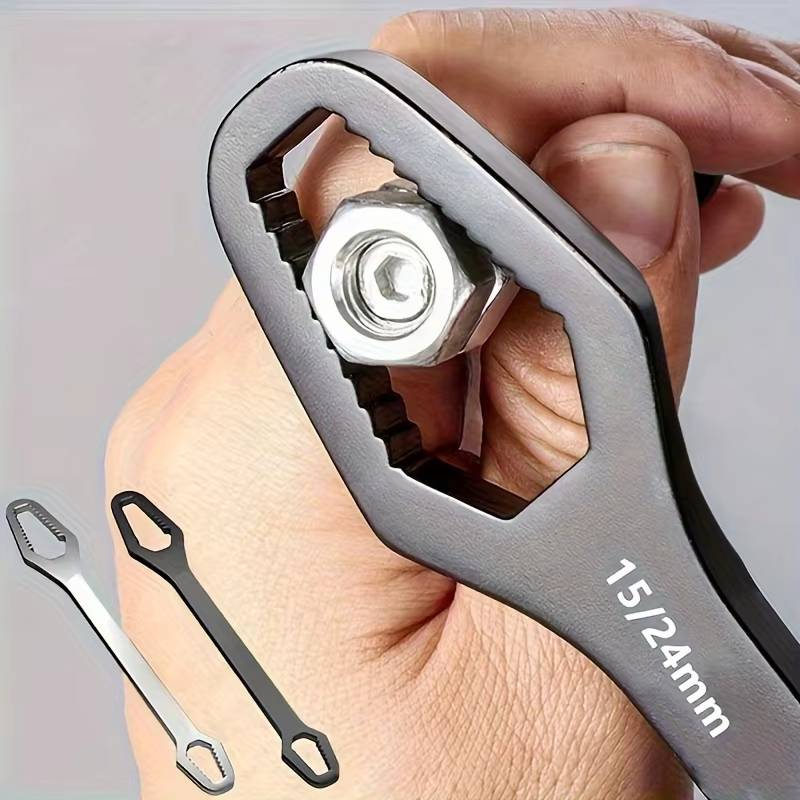
Let’s be honest. Most of us have been there — crouched under a sink, elbow deep in an engine bay, or locked in battle with a stubborn bolt — desperately hunting through a pile of wrenches for the right size, only to find it’s in the garage, in the other toolbox, or possibly in another dimension entirely. If that sounds familiar, pull up a chair (or a creeper stool), because we need to talk about the Universal Double Ended Wrench.
What On Earth Is This Thing?
At first glance, it looks like someone took two wrenches, told them to shake hands, and then welded them together out of spite. But don’t let the unconventional design fool you — this is actually one of the cleverest tools to enter the humble toolbox in a long time.
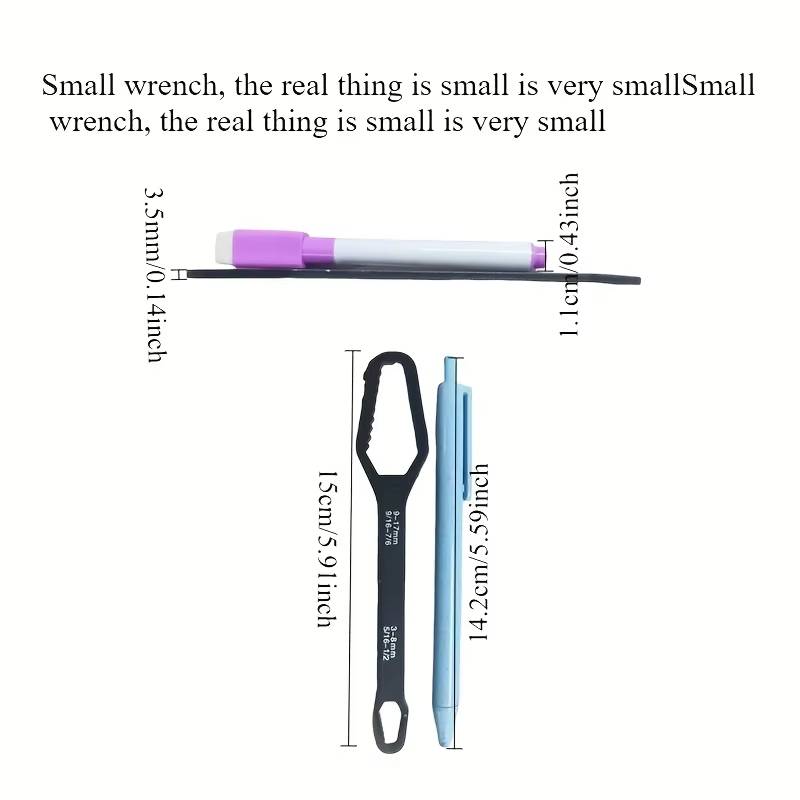
The Universal Double Ended Self-Tightening Ratchet Spanner is an adjustable, double-headed wrench that covers nut and bolt sizes from 3mm all the way to 17mm. That’s one tool doing the job of roughly fourteen. Your drawer space just breathed a sigh of relief.
How Does It Work? (No, Really)
Here’s where things get genuinely clever. The wrench features a self-tightening mechanism, which means the harder you turn, the tighter it grips. It essentially works with the physics of what you’re doing rather than against it. No more slipping. No more skinned knuckles. No more colourful vocabulary echoing through the garage.
Each end of the wrench handles a different size range, giving you maximum coverage without carrying around a full socket set. It’s like having a Swiss Army knife, except instead of a tiny scissors you’ll never use, you get a wrench on both ends — which is infinitely more useful.
Who Is This Actually For?
Honestly? Almost everyone who has ever touched a bolt.
- DIY home repairers who are tired of buying a new wrench for every slightly different-sized nut their IKEA furniture seems to require.
- Car enthusiasts and weekend mechanics who want a compact, go-to tool that handles most jobs without dragging out the full toolkit.
- Cyclists and motorcyclists who need a lightweight, portable option for roadside repairs.
- Plumbers, electricians, and tradespeople looking for a reliable backup or a compact tool for tight spaces.
- That one friend who always shows up to “help” with tools borrowed from your garage — give them this so at least they have something useful.
The Specs That Matter
Here’s a quick rundown of what makes this wrench worth the counter space:
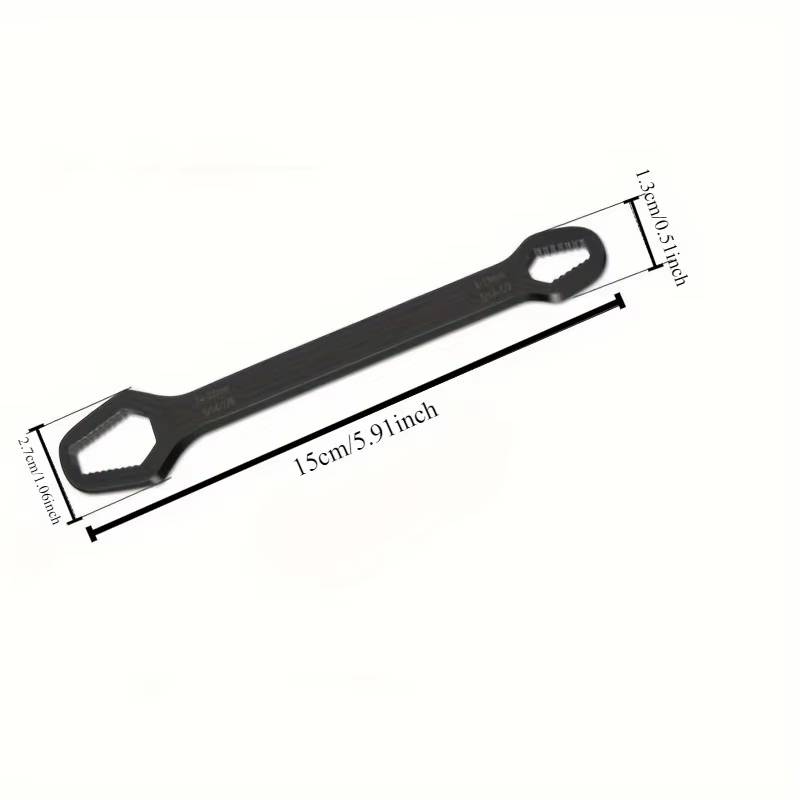
- Size range: 3mm – 17mm (covers an impressively wide variety of standard fasteners)
- Design: Double-ended for dual-range coverage
- Mechanism: Self-tightening ratchet action — grips harder as you apply torque
- Adjustable: No preset notches to fiddle with; it conforms to the fastener
- Compact: One tool, multiple jobs, minimal storage footprint
A Few Things to Keep In Mind
Honestly? No tool is perfect (except maybe duct tape, but that’s a different blog post). The self-tightening mechanism works best when you have good access to the fastener — in extremely tight or awkward spaces, a dedicated socket set may still be your friend. Also, for very high-torque jobs, you’d want something beefier. But for the vast majority of everyday tightening and loosening tasks? This wrench punches well above its weight.Almost everyone who has ever touched a bolt.
The Verdict
The Universal Double Ended Self-Tightening Adjustable Ratchet Spanner is one of those tools you buy once and then wonder how you lived without it. It’s smart, it’s compact, it’s versatile, and it will almost certainly save you from at least one white-knuckle wrench-slipping incident per year — which, depending on how much you value your knuckles, is worth the price of admission alone.
Whether you’re a seasoned tradesperson, a weekend DIYer, or someone who just wants to stop buying individual wrenches every time the universe invents a new bolt size — this one deserves a spot in your kit.
👉 [Click Here To Buy] — Grab yours and never go wrench-hunting again.
Have a tool you’d like us to review? Drop a comment below — we love a good gadget, especially one that makes life measurably less frustrating.